

Parcel Management / Charge Slip Generator

Strategy / Product Design / UX / UI

Principal UX Design Lead, Amodcs Studio — 18 months

Turned a $5M revenue leak into a scalable, automated workflow. End-to-end design of a charge slip system built for 100+ locations, 2M+ packages annually, and the operational complexity that comes with both.

High-volume convention center parcel operations
Convention Centers managed by Parcel Management

FedEx Parcel Management operations span 100+ high-volume locations, generating $32M in annual revenue. Legacy manual workflows hadn't kept pace with operational growth, causing an estimated $5M+ in annual revenue leakage and increasing systemic risk.

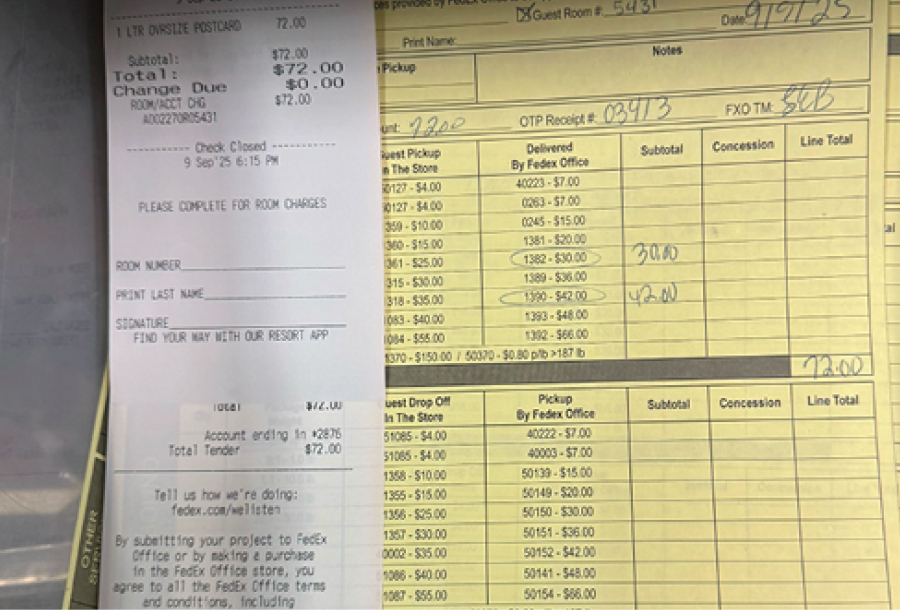
Staff relied on cumbersome, error-prone processes — paper-based 3-part charge slips, manual calculations, and fragmented team communication across pickup and delivery workflows.

Locations 116 Hotel / convention
Parcel fee revenue $32M Annual revenue
Package volume 2M+ Annual volume
Revenue leakage ~$5M Annual fee leakage
FedEx Parcel Management operations
FedEx Headquarters in Frisco, Tx.

A high-volume parcel operation relied on a fragmented, semi-manual charge slip process to calculate handling and storage fees. As volume scaled across 100+ locations, the system failed to keep pace — leading to inconsistent fee application, operational friction, and an estimated $5M+ in annual revenue leakage.

The core issue wasn't just interface — it was structural. Every item required an assigned handling type before accurate fees could be calculated, yet the workflow lacked safeguards to enforce completion.

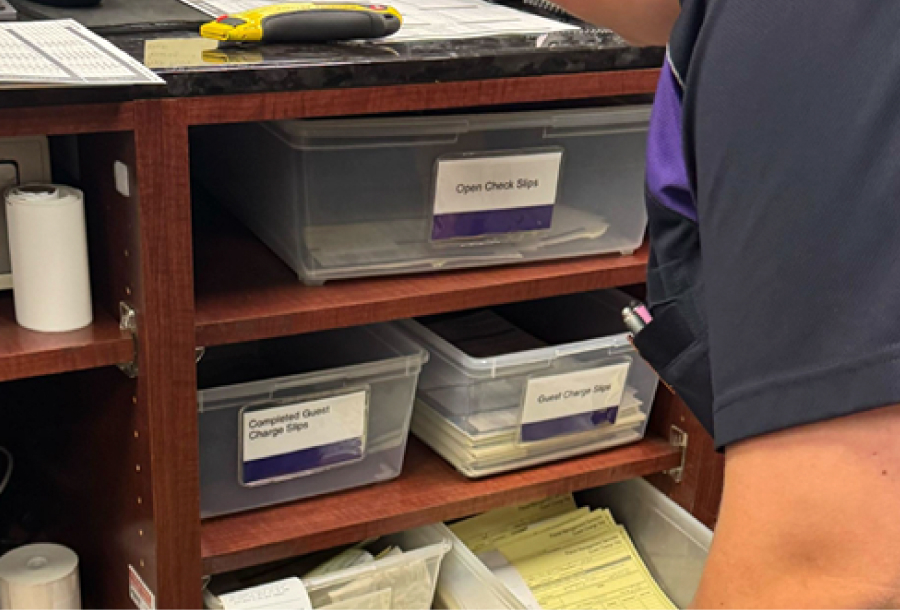
Manual paper charge slip billing workflow
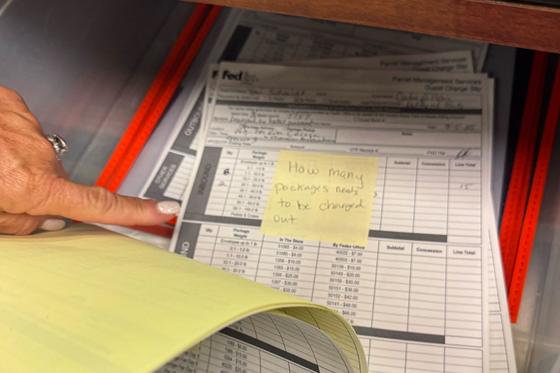
The Bins and Post-it Notes System

Manual processes were creating $5M in annual leakage across 100+ locations. The solution wasn't just automation, it was enforcement. A workflow that wouldn't let a charge slip finalize until every variable was resolved.

Beyond the charge slip, the overhaul touched the entire application, from redesigned dashboards and inventory workflows to surfacing storage fee alerts that had never been visible before.

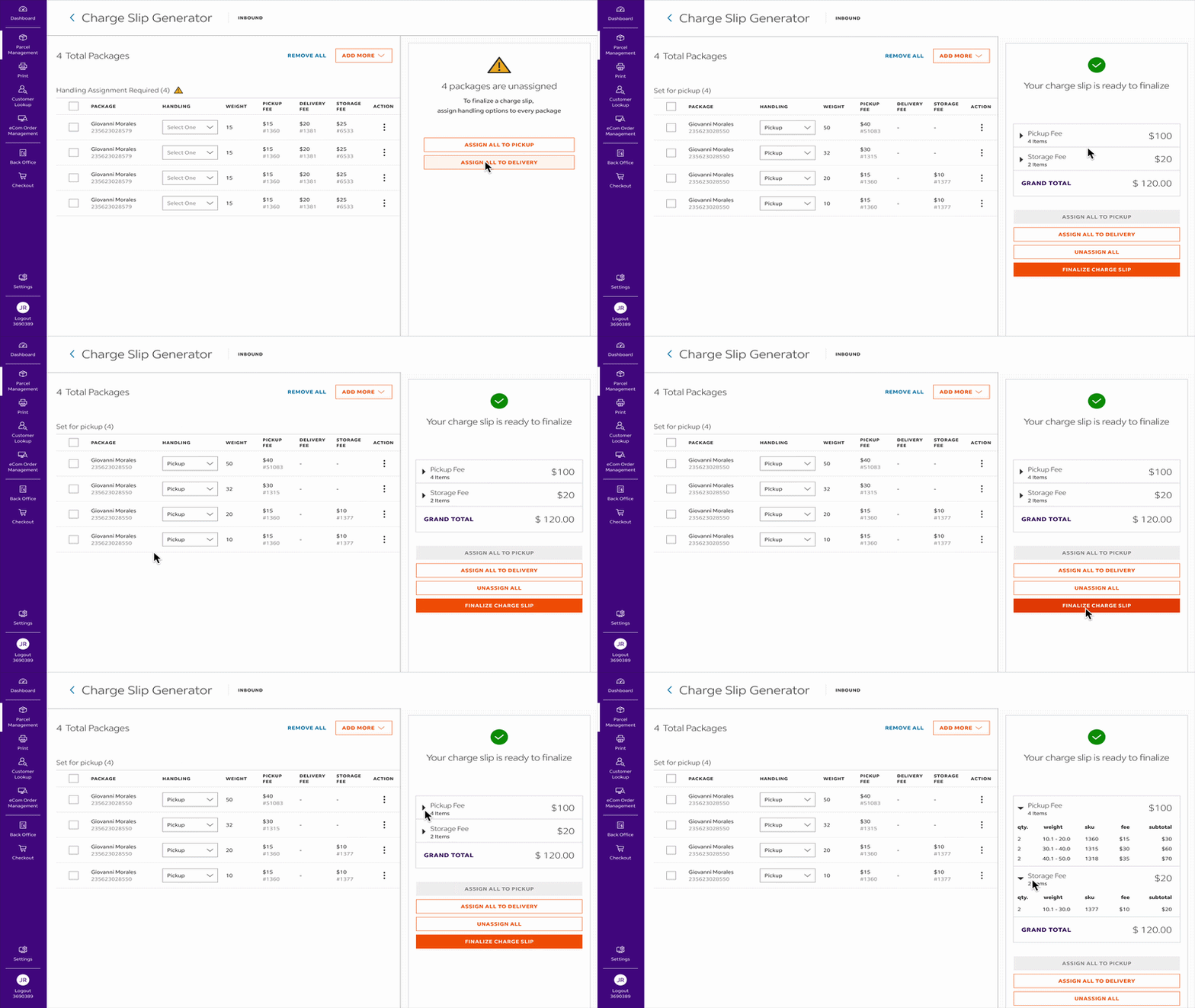
Charge slip generator — digital fee assignment in action
  1. System architecture — structural rules ensuring every item carried a validated handling type before fee calculation
  2. Workflow engineering — flexible assignment methods for real-world floor operations
  3. Revenue safeguards — conditional UI states that blocked finalization when items were incomplete
  4. Cross-functional leadership — aligned product, engineering, and operations on business logic and interaction design

The manual Charge Slip process was creating operational friction and $5M+ in annual revenue leakage. I re-architected it into a scalable, automated system that restored accuracy and improved fee transparency.

There was revenue at risk

  • Manual charge slips and calculator-based fee tracking
  • No real-time summaries or storage fee visibility
  • Disconnected workflows causing ~$5M+ annual leakage

A manual billing workflow was creating negative friction and measurable revenue loss across a $32M operation.

Created modular solutions

  • Replaced paper slips with a digital, multi-stage workflow
  • Flexible single and bulk item and fee assignment
  • Automated fee summaries and storage fee alerts

Delivered a modular, automated system designed for accuracy, scalability, and high-volume operations.

The business effect

  • Eliminated manual fee tallying and reduced errors
  • Increased fee transparency and surfaced hidden revenue
  • Supported thousands of line items per transaction

Improved operational confidence and strengthened revenue protection at enterprise scale.

To ensure the Charge Slip system addressed both operational and business needs, I conducted structured stakeholder interviews across multiple locations — clarifying scope, identifying bottlenecks, and capturing staff insights that shaped design priorities.

Onsite observations at the Gaylord Texan Resort & Convention Center mapped end-to-end workflows, handoffs, and operational gaps across 1.3M sq. ft. of resort space and 500K sq. ft. of convention space.

Gaylord Texan Resort and Convention Center onsite research
Gaylord Texan Resort & Convention Center walkthrough

Storage

Organizes slips by type — blank, open, or complicated — keeping records structured and accessible.

Opportunity: Enable quick digital categorization and retrieval of charge slips.

Physical charge slip storage and categorization

Notes

Team members used sticky notes
to track customer questions
manually.

Opportunity: Track customer questions in real time without manual workarounds.

Manual sticky-note tracking for customer questions

Record retention

Physical charge slips are separated
into three-part forms for filing
and audit compliance.

Opportunity: Maintain a digital audit trail while meeting compliance requirements.

Three-part charge slip record retention for audit compliance

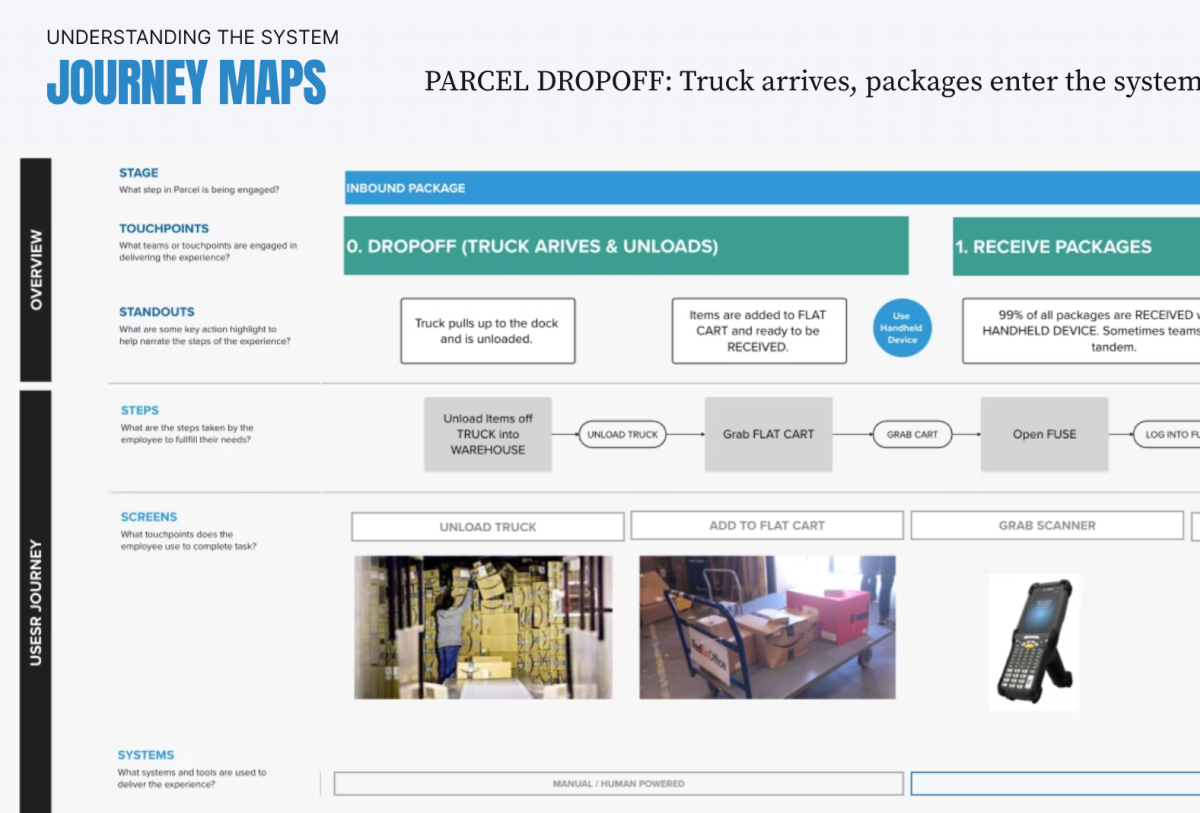
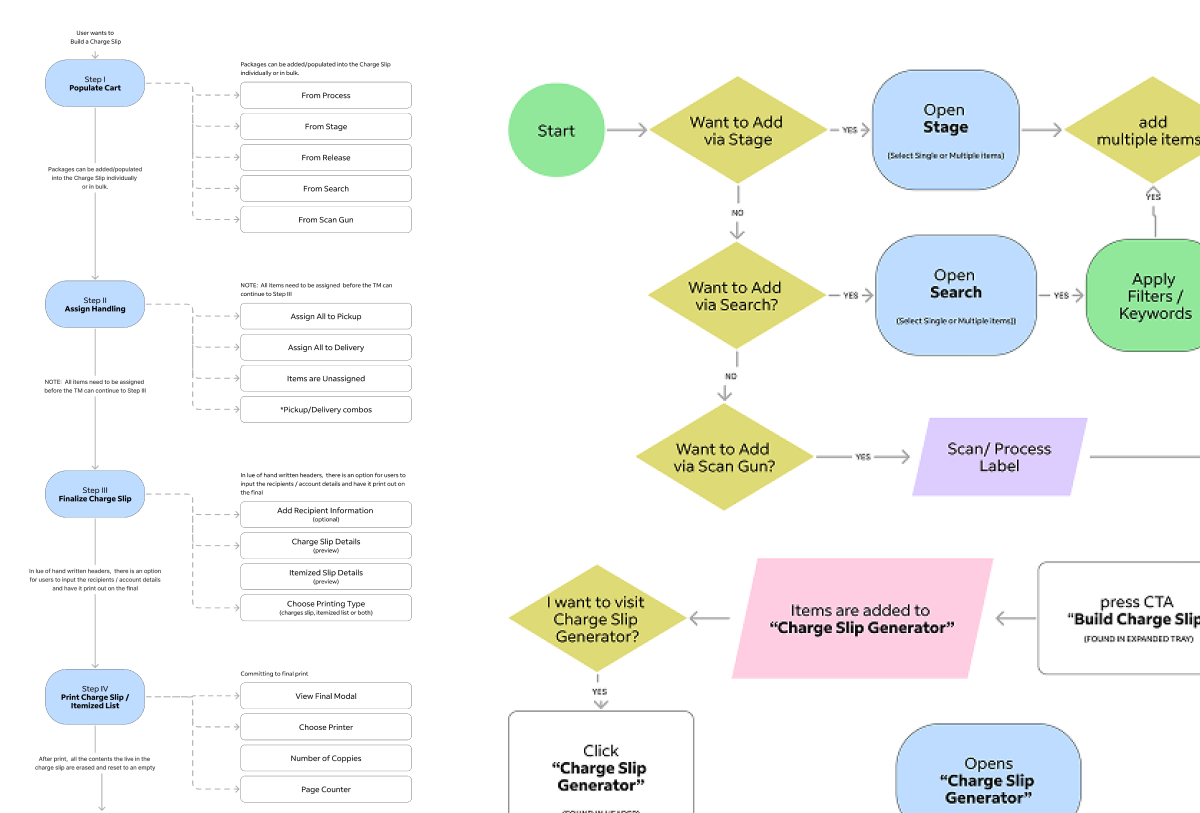
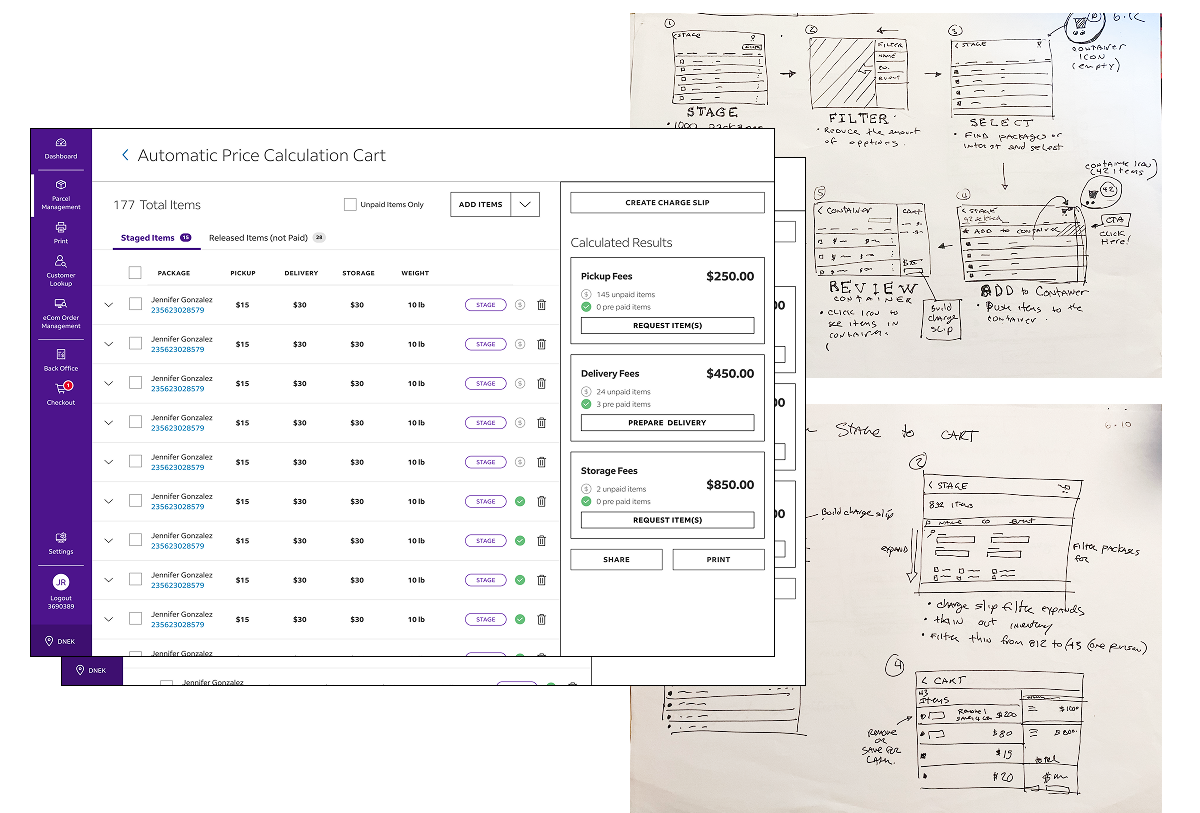
I explored workflows, user interactions, and technical constraints through journey mapping, user flows, wireframes, and prototypes — aligning stakeholders, engineering, and operational teams while surfacing key system gaps.

  1. Journey mapping — end-to-end operational workflows, happy paths, and pain points
  2. User flows — validated the 4-step Charge Slip process and cross-device workflows
  3. Wires & prototyping — early screens within the FedEx FUSE design system
End-to-end operational journey map
Four-step charge slip user flow diagram
Early wireframe screens within the FedEx FUSE design system

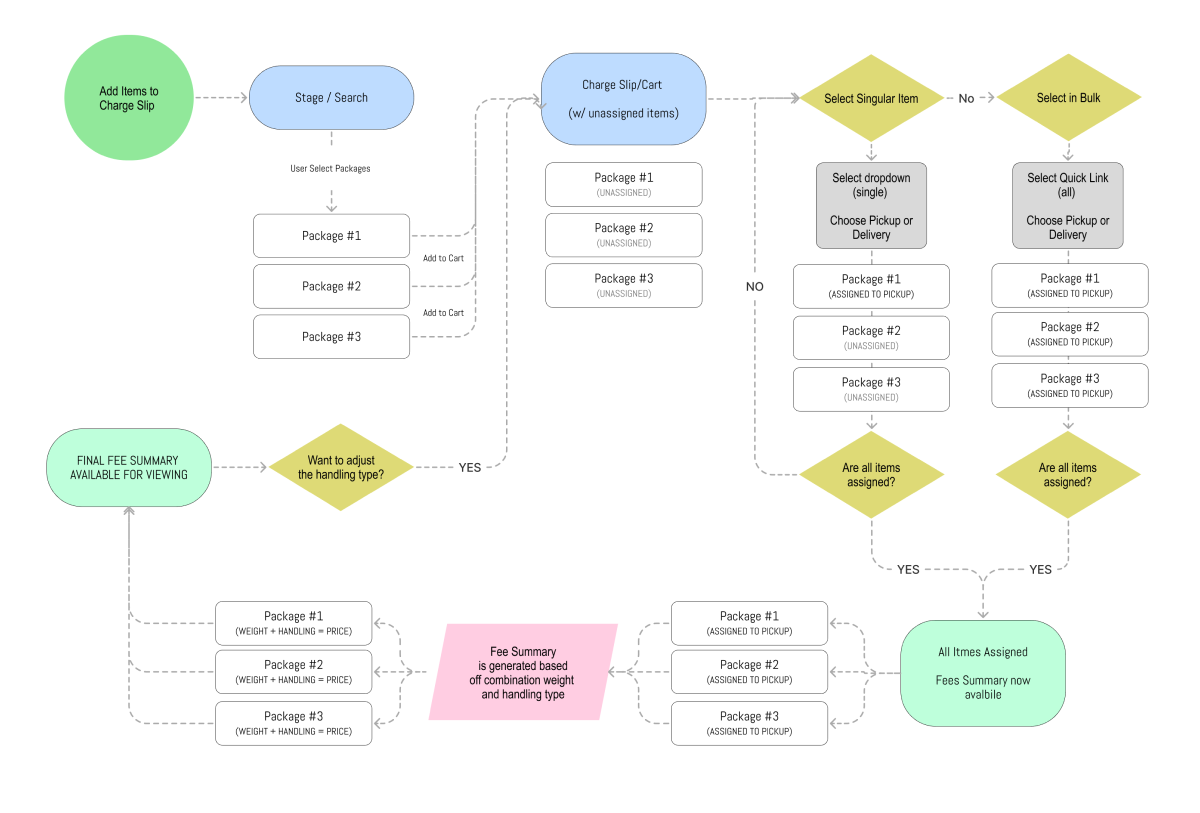
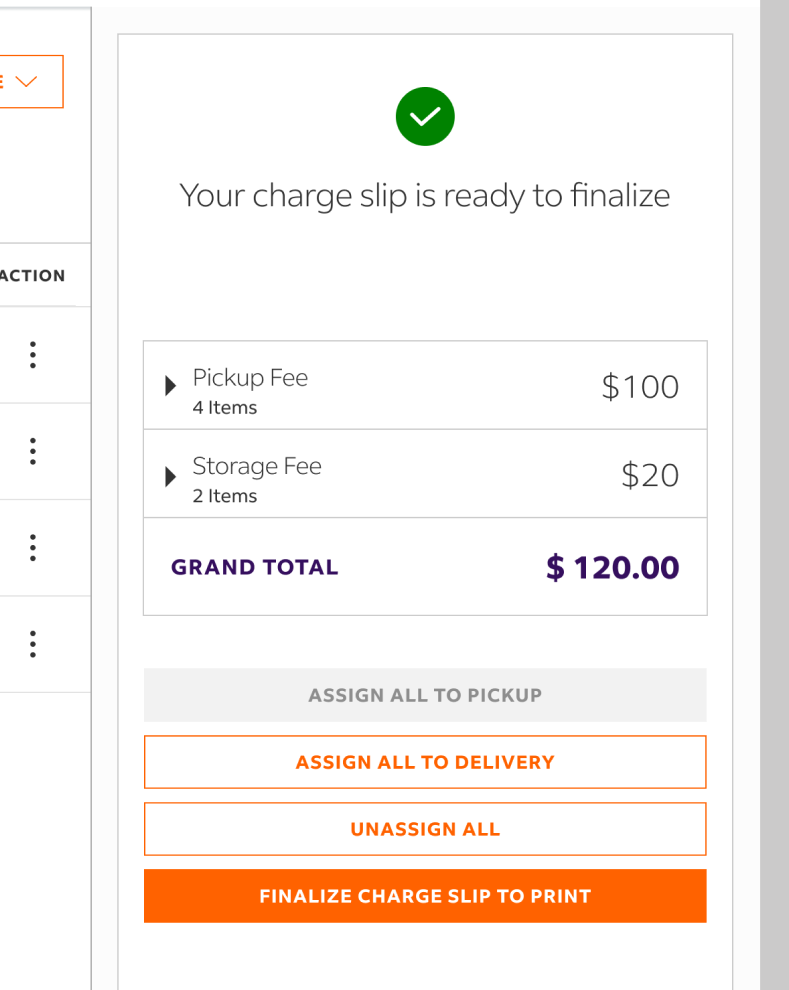
Every item needed a defined handling type before fees could be calculated and summarized accurately. The experience balanced flexible assignment with strict operational safeguards to prevent revenue gaps.

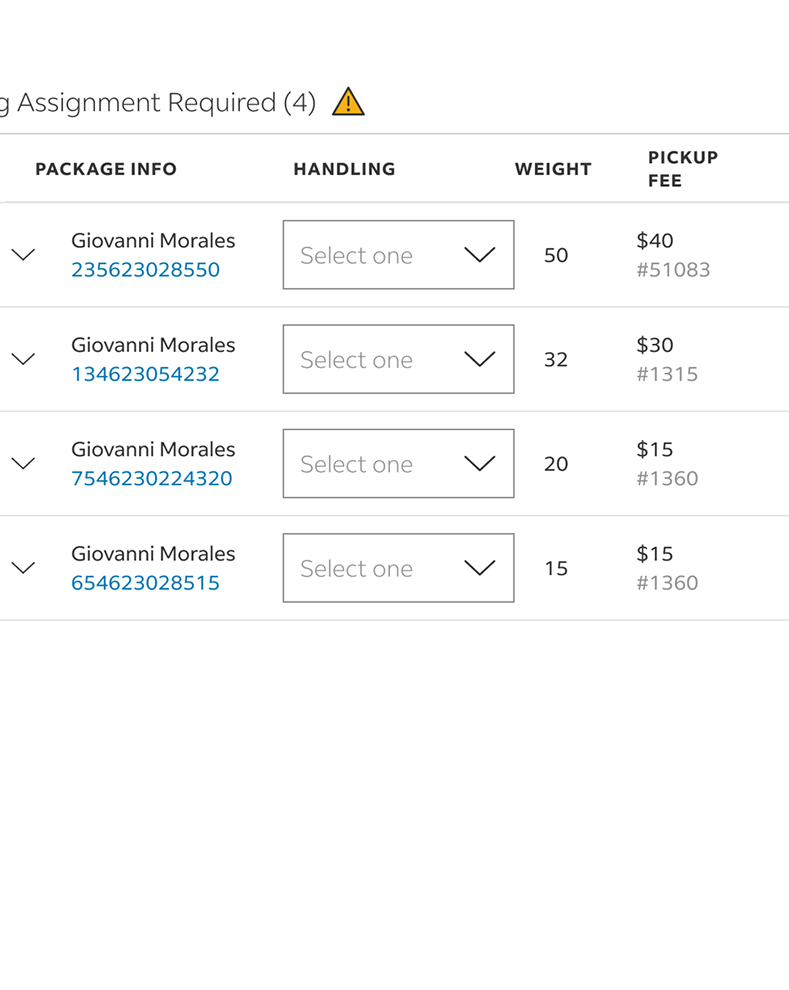
  1. Require handling type for every item before proceeding
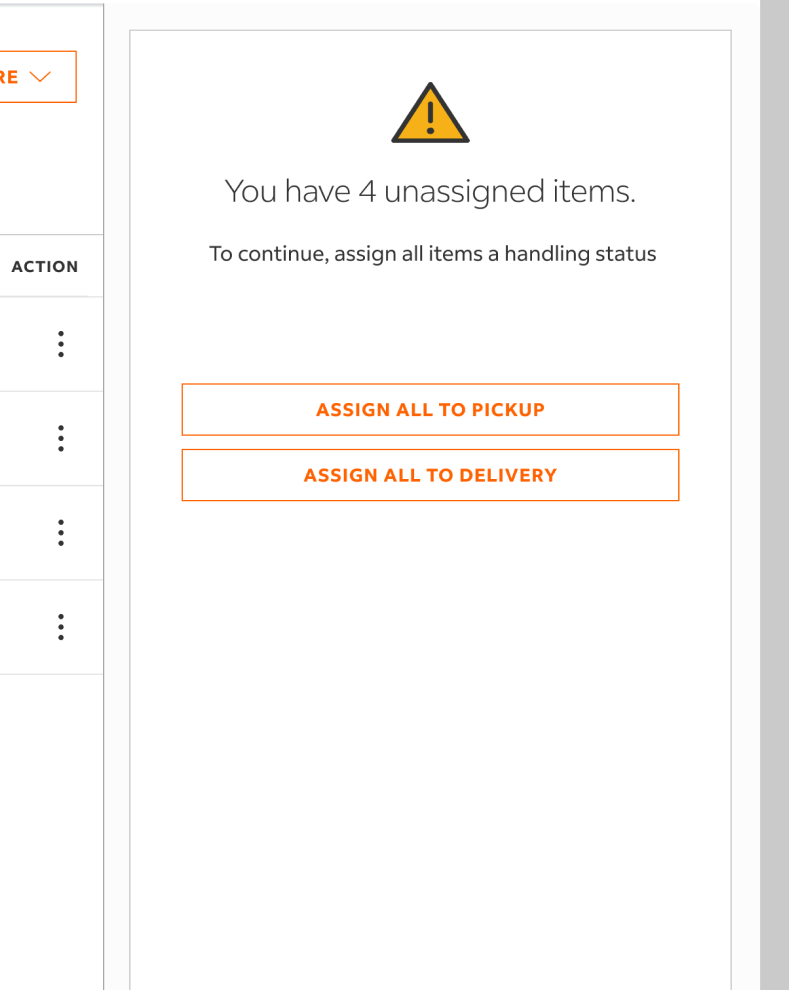
  2. Support individual, batch, or bulk item assignment
  3. Disable fee summary until all items have a handling type
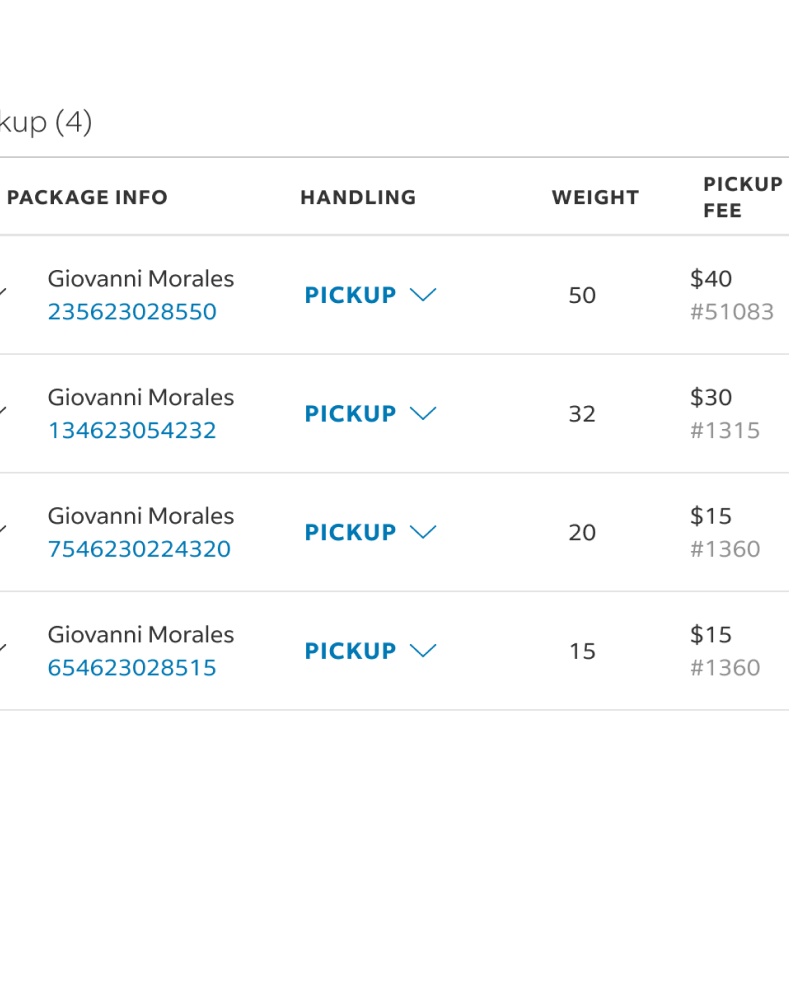
  4. Activate dynamic fee summary once validation is complete
Handling fee assignment overview
Charge slip with unassigned handling types
Fee summary disabled until all items are assigned
All handling types assigned on charge slip
Dynamic fee summary with handling and storage fees calculated

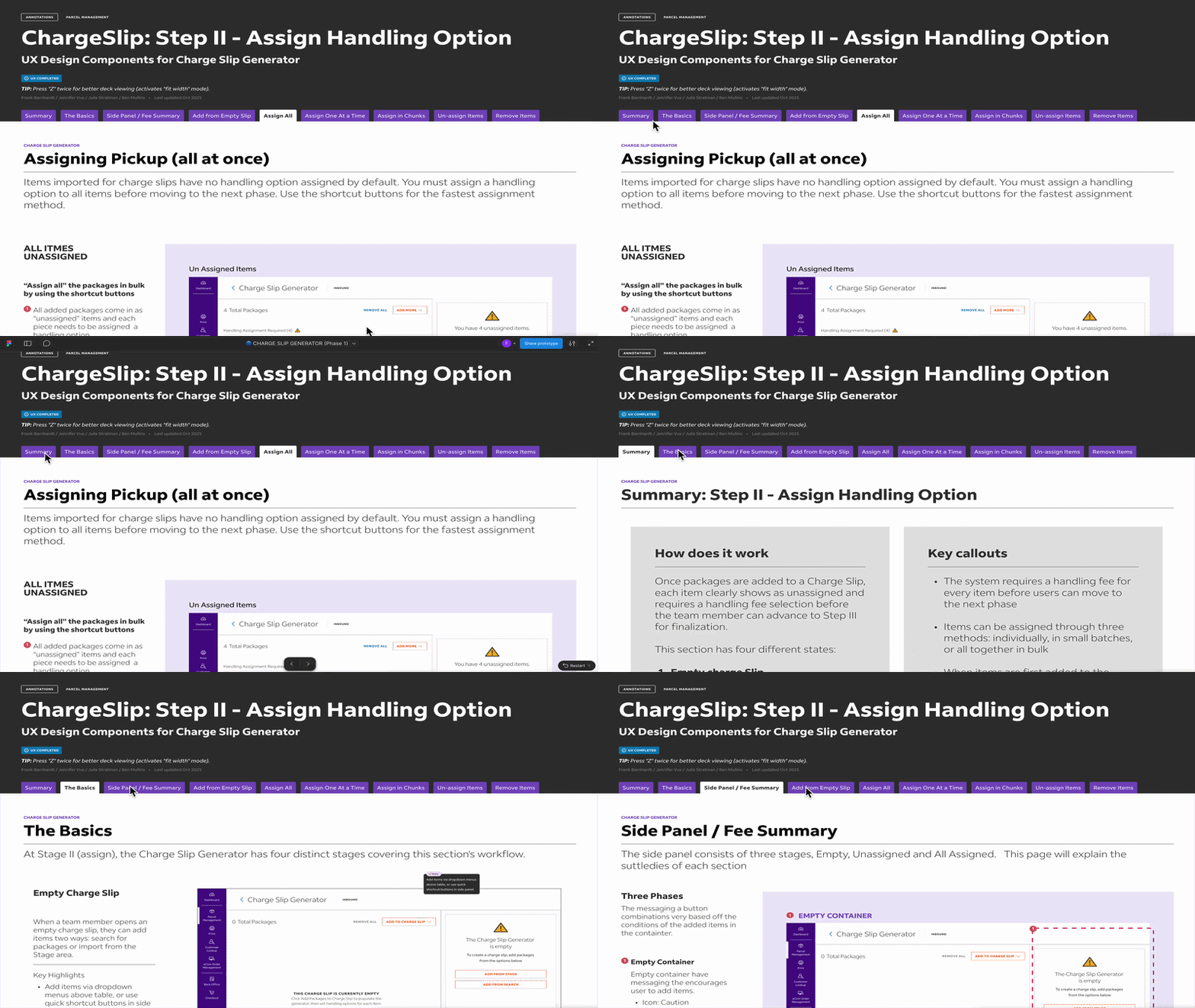
Created interactive Figma tabs to organize specifications and edge cases. Worked 1:1 with developers early to clarify functionality, documented workflows and micro-interactions, and iterated from feedback to ensure fidelity to the design vision.

Aligned schedules, scope, and priorities with PMs; presented designs to engineering with clear intent; and maintained cross-team alignment through scrum planning and dependency mapping.

Interactive annotation demo — bulk item and fee assignment
Figma handoff specifications and development annotations

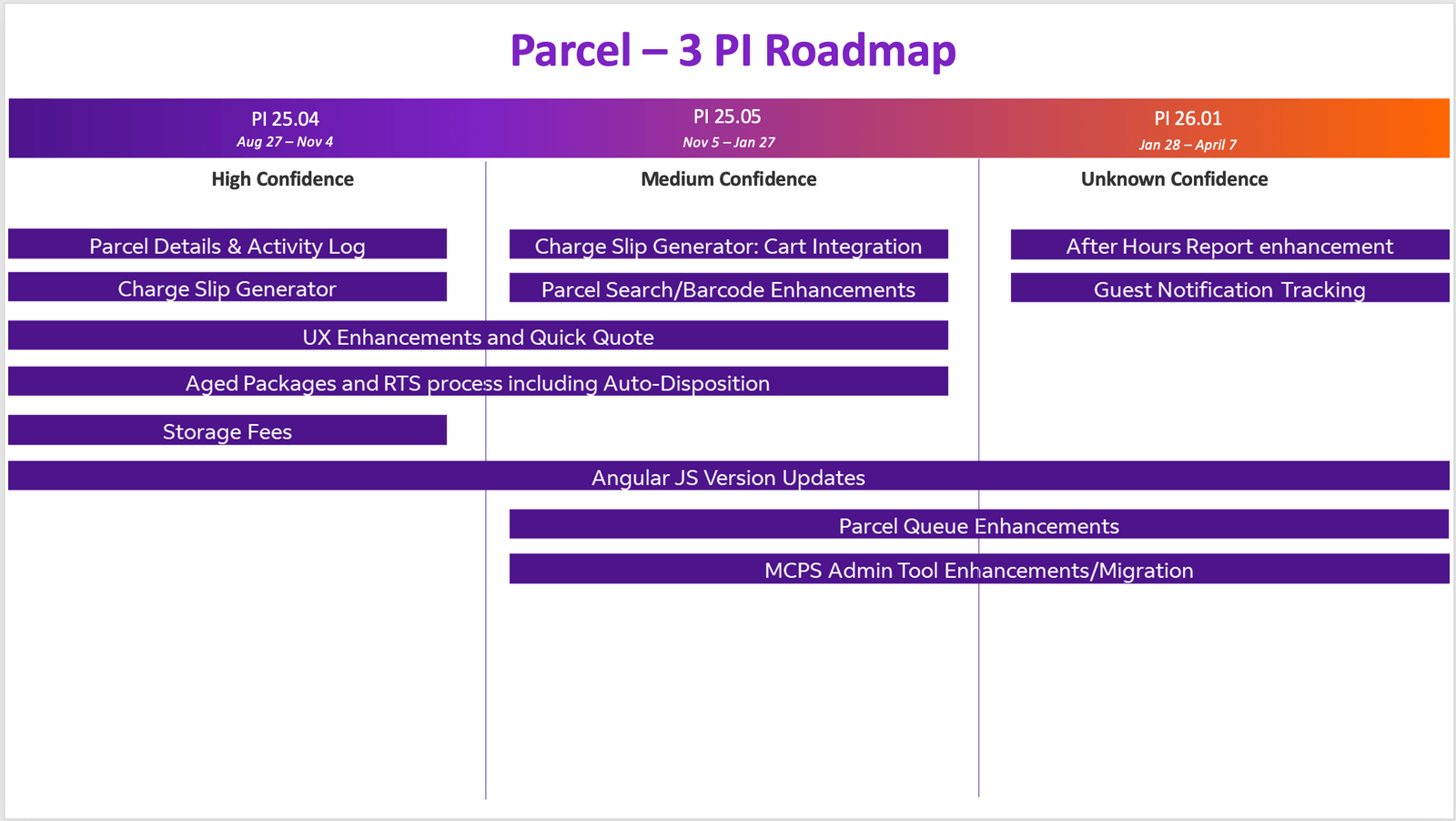
As Principal UX Designer, I translated complex operational workflows into a clear, achievable roadmap. I transformed a feature once considered "too complex" into a prioritized, achievable part of the roadmap — building credibility and momentum with stakeholders.

Key challenges included enabling individual and bulk fee assignment, integrating optional itemized checklists, balancing compliance and audit requirements, and designing for simultaneous use across multiple locations and devices.